• Research
  • About
  • Experts
Carnegie India logoCarnegie lettermark logo
AI
Podcast Episode
Carnegie India

Subsea Cables, AI Infrastructure, and Africa's Connectivity Gap

In this episode of Interpreting India, Charukeshi Bhatt speaks with Jane Munga, fellow with the Africa Program at the Carnegie Endowment for International Peace, on the subsea cable landscape in Africa. With the continent now home to around 77 submarine cables and one of the fastest growing AI infrastructure markets in the world, the conversation moves beyond the headline investment numbers to ask harder questions: who benefits, who governs, and what does resilience actually look like when the cables go down?

Link Copied
By Charukeshi Bhatt and Jane Munga
Published on Aug 27, 2026

Subscribe on

SpotifyApple PodcastsAmazon MusicYoutube
Project hero Image

Project

Technology and Society

This program focuses on five sets of imperatives: data, strategic technologies, emerging technologies, digital public infrastructure, and strategic partnerships.

Learn More

Invalid video URL

In this episode of Interpreting India, Charukeshi Bhatt speaks with Jane Munga, fellow with the Africa Program at the Carnegie Endowment for International Peace, on the subsea cable landscape in Africa. With the continent now home to around 77 submarine cables and one of the fastest growing AI infrastructure markets in the world, the conversation moves beyond the headline investment numbers to ask harder questions: who benefits, who governs, and what does resilience actually look like when the cables go down?

This episode explores:

  • Africa is seeing a surge in AI and cable infrastructure investments, but is that translating into connectivity gains on the ground?
  • Cable repair is a global choke point, but Africa has only one dedicated repair vessel for an entire continent. What does that mean in practice?
  • As Chinese infrastructure deepens its footprint across Africa, how are African governments navigating the sovereignty debate?
  • What did the ITU's international advisory body on subsea cables deliver, and what happens to its recommendations now?

Episode Notes

Jane opens with a framing that runs through the entire conversation: for Africa, the subsea cable story is not primarily about geopolitics. It is about connecting citizens and translating that connectivity into economic participation. Less than 40% of Africans use the internet, and while infrastructure investments are significant, the benefits tend to concentrate in urban hubs like Nairobi, Lagos, and Cape Town, while rural populations, women, and landlocked countries remain underserved. The 2024 cable cut that affected ten African countries brought into sharp focus just how fragile the system is. Africa has only one dedicated cable repair vessel for the entire continent, and mobilizing it costs millions of dollars and takes days. Jane walks through what is now being put in place: clearer government notification protocols, mandated interconnection between telecom operators, and cross-border coordination frameworks, with West Africa emerging as a model that the rest of the continent has not yet replicated.

On Chinese infrastructure, Jane is pragmatic. The framing of east versus west is, in her view, the wrong one for African policymakers who are already deeply invested in Chinese telecom towers, terrestrial fiber, and mobile devices across the continent. The more useful question is how to secure what already exists, ensuring cybersecurity safeguards are in place regardless of where the infrastructure comes from. On the ITU advisory body, whose final report was published in Geneva in July, the recommendations cover coordination, standards, and geographic diversity, but the document is non-binding. The real work, she says, now rests with national governments and regulators to take those recommendations forward.

Hosted by

Charukeshi Bhatt
Research Analyst, Technology and Society Program
Charukeshi Bhatt

Featuring

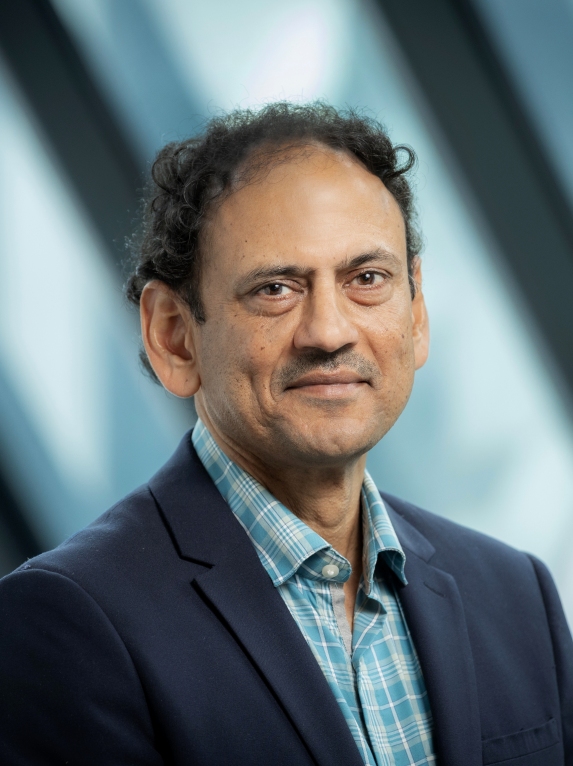
Jane Munga
Fellow, Africa Program
Jane Munga

Carnegie India does not take institutional positions on public policy issues; the views represented herein are those of the author(s) and do not necessarily reflect the views of Carnegie, its staff, or its trustees.

More Work from Interpreting India

  • Podcast Episode
    India, Australia, and the Critical Minerals Opportunity

    In this episode of Interpreting India, Shruti Mittal, research analyst at Carnegie India, speaks with Professor Mohan Yellishetty of Monash University on the India-Australia critical minerals partnership, what it has delivered so far, and where the two countries can build the most meaningful cooperation over the next decade.

      Shruti Mittal, Mohan Yellishetty

  • Podcast Episode
    Chokepoints, Economic Warfare, and India's Strategic Options

    In this episode of Interpreting India, Konark Bhandari, speaks with Edward Fishman, author of Chokepoints: American Power in the Age of Economic Warfare, on economic statecraft, how the U.S. built its playbook for economic warfare over time, and what the lessons are for India as it looks to build its own economic resilience. 

      Konark Bhandari, Edward Fishman

  • Podcast Episode
    India's AI Ambitions and the Road to Viksit Bharat | AI Summit Special

    In this episode of Interpreting India, Nidhi Singh, speaks with Debjani Ghosh, distinguished fellow at NITI Aayog and chief architect of the NITI Frontier Tech Hub. With nearly three decades across Intel, NASSCOM, and now NITI Aayog, Debjani brings a perspective that is both deeply practical and genuinely optimistic. She co-chaired the working group on AI for Economic Growth and Social Good at the India AI Impact Summit, and in this conversation she reflects on what the summit delivered, what India's AI journey needs to get right, and why the human being has to stay at the center of all of it.

      Nidhi Singh, Debjani Ghosh

  • Podcast Episode
    Did India's AI Summit Get Safety Right? AI Summit Special

    In this episode of Interpreting India, Nidhi Singh, speaks with Professor Balaraman Ravindran, Head of the Department of Data Science and AI at IIT Madras, and Co-Chair of the Safe and Trusted AI Working Group at the India AI Impact Summit. Since the summit, Professor Ravindran has also been appointed to the UN's Independent International Scientific Panel on AI. There is a narrative that has taken hold since the summit, that India moved away from safety and left frontier risks behind. This conversation sets the record straight.

      Nidhi Singh, Balaraman Ravindran

  • Podcast Episode
    Subsea Cables, Trusted Networks, and India's Strategic Opportunity

    In this episode of Interpreting India, Charukeshi Bhatt speaks with Pooja Bhatt, associate professor, Jindal School of International Affairs, O.P. Jindal University, on a piece of infrastructure that is easy to overlook and very difficult to protect: subsea cables. Stretching over 1.5 million kilometres across ocean floors and carrying nearly 99% of global data traffic, these cables underpin everything from financial systems and cloud infrastructure to the everyday digital services that billions of people rely on. For India, a fast-growing digital economy with expanding data center ambitions, getting this right is not optional.

      Charukeshi Bhatt, Pooja Bhatt

Get more news and analysis from
Carnegie India
Carnegie India logo, white
Unit C-4, 5, 6, EdenparkShaheed Jeet Singh MargNew Delhi – 110016, IndiaPhone: 011-40078687
  • Research
  • About
  • Experts
  • Projects
  • Events
  • Contact
  • Careers
  • Privacy
  • For Media
Get more news and analysis from
Carnegie India
© 2026 Carnegie Endowment for International Peace. All rights reserved.