California is just about as far from Washington, DC, as you can get in the continental United States, and many Californians’ views regarding the People’s Republic of China (PRC) seem to reflect this distance. On its face, the contrast from one coast to the other is stark: perceptions of China within the DC Beltway are increasingly dominated by surging bilateral competition in national security and technology domains. Meanwhile, sunnier attitudes prevail on the Pacific coast, where economic issues remain paramount.
Beneath that surface difference, though, are currents of Californian opinion that illuminate how U.S. national and subnational relationships with China are evolving. The 2024 Carnegie California Global Affairs Survey affords unique and valuable insights into some increasingly stark tradeoffs facing Americans on national security and economic issues.
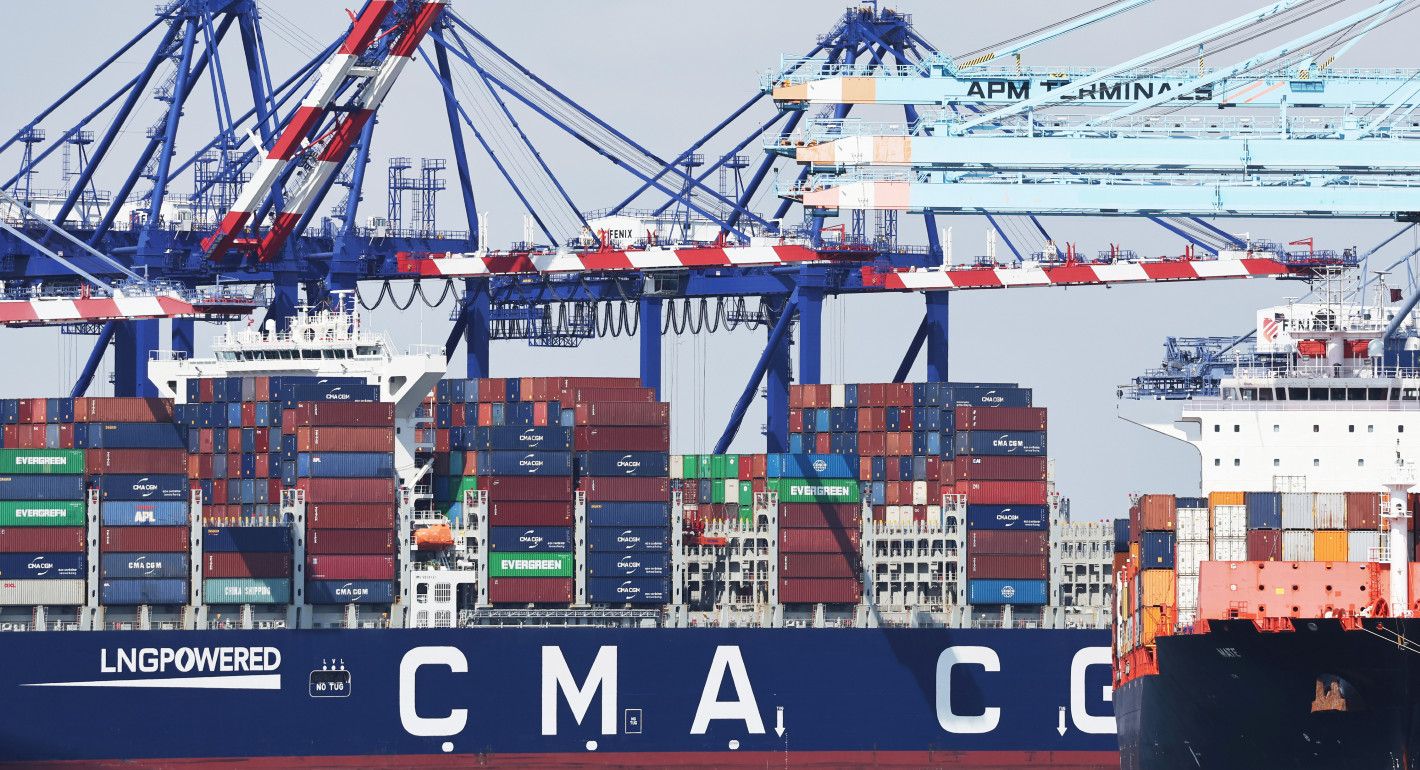
In particular, Californians are coming to recognize the acute vulnerability of the state’s critical infrastructure—especially the ocean ports that facilitate the lion’s share of U.S. merchandise trade with China. Rising concerns about infrastructure (which include the risk of cyberattacks disabling ports, as well capacity issues plaguing port operations) highlight the national security dilemmas created by the nation’s dependence on China as a trading partner. This tension is out in the open in Washington, but through the Carnegie survey, we can detect an inchoate shift in this direction on the Pacific coast.
As a baseline, we see a huge proportion of Californians who recognize the U.S.-China relationship as very (44 percent) or somewhat (40 percent) important. There is also a large majority who rate the quality of the relationship as only poor (37 percent) or fair (39 percent). Some of the reasons for this relatively dim Golden State view on the status of a critical bilateral relationship can be teased out of the survey results.
- A plurality (43 percent) of Californians views Asia as the most important region in the world for U.S. future prosperity, with the region’s largest and most dynamic economy, China, likely the primary reason for that expectation. For all but the oldest Californians (forty-five and up), economic issues appear more important than security issues.
- A still larger plurality (46 percent) sees China’s economic importance as a less salient priority than its human rights abuses and expresses support for a policy approach that “promote[s] human rights in China, even if it harms economic relations”
- Another plurality (43 percent) views China as a threat to Asia and favors American efforts to counter China’s influence by strengthening regional militaries.
- Finally, a large majority are either very (46 percent) or somewhat (20 percent) supportive of Taiwan’s sovereignty—the issue most likely to trigger greater hostility and even armed conflict between the United States and the PRC.
These data points offer us a glimpse of a disconnect that seems likely to grow more glaring over time. Californians clearly prize their relations with China as an economic boon yet appear willing to support policies that are likely to undermine those economic ties by supporting human rights and Taiwanese sovereignty, as well as by further strengthening U.S. allies’ military capabilities in the region. This show of Californian support for some of the factors leading to the progressive deterioration of U.S.-China ties—including in the economic realm—shows us that the darkening views of China along the Beltway may well be overstated, but they are not necessarily out of step with the political convictions of broad swathes of the American public.
The surface differences in priorities between Washington and the state of California appear even less substantial when we analyze the Carnegie California survey’s results on questions about infrastructure. By inference, Californians are worried about the consequences of high levels of trade integration with China and close cooperation with Chinese firms in building and operating the key infrastructure facilitating that trade. These positive economic ties create vulnerabilities that appear increasingly realistic.
Indeed, a substantial majority of Californians (69 percent) think of infrastructure as a national security issue, with a majority (51 percent) identifying “critical energy infrastructure, including the electric grid,” as the most concerning, followed by “port security and safety” (20 percent). Those ports are the essential nodes for U.S.-China trade, however, and are directly implicated in a range of other issues that appear threatening to Californians, even as they profess to see national security as a lesser priority. For example, most Californians (59 percent) see cyberattacks as a “major threat” to their security; slightly fewer (52 percent) also consider supply chain disruptions to be a “major threat.”
The fact that ports are a likely vector for both of these security contingencies should not be overlooked. With increasing digitization of ports and the information networks used to manage trade, port operations are increasingly and perhaps uniquely vulnerable to cyberattacks that may cripple trade. Lesser disruptions to vital international supply chains are often caused and often exacerbated by operational slowdowns at ports. Such delay and dysfunction may be caused by cyberattacks, labor issues, trade spats, and many other challenges. China’s 80 percent market share of STS cranes—an essential digital port technology—is among the legitimate issues that links China-related national security issues with the economic fate of California.
Finally, operations and capacity at California ports are of concern to a majority of Californians (62 percent), and an equal number are concerned that shipping and trade with Asia may suffer in the future. These are related worries, as California ports lag their Chinese counterparts in automation and efficiency and import far greater volumes than they export back to Asia. This disparity makes operations at California ports especially vulnerable to supply chain disruptions and resulting economic hardships that could occur with a renewed trade war between the United States and China, sanctions on major Chinese trading firms, or military conflict in the Western Pacific.
As the primary conduit for trade between the United States and China, California’s ports are in many respects on the front lines of an expanding strategic competition. They are central considerations when reckoning the risks and rewards of the complex relationship, which must be intermediated through the limited number of terminals that connect China and the United States across the Pacific. Along with other critical infrastructure, California’s ports manifest all of the contradictory interests and trends that characterize the bilateral relationship, expressed most clearly in the tension between national security and economic priorities.
The Beltway’s fixation on the China threat may not be shared by the typical Californian, yet Californians also perceive certain major national security risks associated with commercial integration with China. Many appear increasingly willing to bear the economic costs associated with a more competitive and less commercially driven U.S. foreign policy toward China.