

Commentary
The induction of INS Aridhaman, which features several technological enhancements, now gives India the third nuclear ballistic missile submarine to ensure continuous at-sea deterrent.
Dinakar Peri
{
  "authors": [
    "Anit Mukherjee"
  ],
  "type": "commentary",
  "centerAffiliationAll": "",
  "centers": [
    "Carnegie Endowment for International Peace",
    "Carnegie India"
  ],
  "englishNewsletterAll": "",
  "nonEnglishNewsletterAll": "",
  "primaryCenter": "Carnegie India",
  "programAffiliation": "",
  "projects": [
    "Security Studies"
  ],
  "regions": [
    "India"
  ],
  "topics": [
    "Military",
    "Security"
  ]
}
Source: iStock
In any defense establishment, change is an ongoing process. However, despite the best of intentions, existing bureaucracies, bound by habit and years of socialization, have their limits in implementing transformative change.
Seven years ago, on August 15, 2019, Prime Minister Narendra Modi announced the creation of the post of Chief of Defence Staff (CDS) along with a whole host of additional reforms, initiating the most significant transformation of the Indian military since independence. Like with any such ambition, the reform efforts have had their share of critics and acclaim but overall, the story is largely positive. Nevertheless, a challenging security environment, technological changes, and lessons from recent conflicts are collectively placing greater demands on the reform process. More importantly, despite some improvement in what’s been termed as “civil-military fusion,” there is a necessity to dramatically scale up the mutual engagement between the military and other elements of national power, ranging from industry—both state and, increasingly, private sector—tech and data firms and academia. This approach, however, would require significant changes in how each of these elements operate.
Over the last decade or so, there has been a sea change, in India’s defense establishment. The government, the military, and the defense establishment deserve credit for this. The creation of the post of Chief of Defence Staff (CDS) in 2019 marked the beginning of a whole host of reforms. The CDS was given a mandate to head a newly created office of Department of Military Affairs (DMA) and has emerged as one of the most important official shaping defense policies. Over the years, there has been a greater emphasis on bottom’s-up, procedural, and operational jointness of the army, navy, and air force. However, despite a time-bound mandate to create joint theatre commands, the Indian military continues with its single service commands, amid periodic speculation about its imminent creation. Worryingly, recent debates within the military community capture deep seated, and historical opposition. The government has seemingly left this reform measure to the military, with a predictable outcome of institutional in-fighting. Like with the CDS initiative, theatre commands can only be instituted with political intent.
Such institutional changes, however, were not the only reform initiative. In the last decade or so, there has been a paradigm shift in the government’s attitude towards the private sector. Previously, private sector defense industry was viewed with suspicion, if not outright hostility, as a source of corruption and vice. While undertaking reforms in the public sector (for instance, by corporatizing the Ordnance Factory Boards), the government has pushed for greater public-private partnership. The military has also been given considerable free rein, in engaging with private industry, which was not always the case. At the same time, there is a newfound ambition to enhance defense exports with a stated aim to encourage codevelopment and coproduction. These measures have resulted in an exponential growth in the number of firms, of varying size, in the private sector. In turn, India’s defense exports have grown significantly, from approximately $60 million to $4 billion over twelve years. Despite such measures, however, reflecting the state of India’s overall manufacturing sector, there are concerns that firms are “white labelling” products, and thereby undermining the goal of self-reliance or aatmanirbharta.[1] On occasion, when startups and private companies come up with deployable products, they encounter an archaic, slow and process driven procurement system. In short, defense manufacturing still has a long way to go.
The outward turn of the military and defense establishment extends to civil society, academia, think tanks, and other research institutions. Accordingly, they have reached out, in an unprecedented manner, to various academic and research institutions mainly, but not exclusively, in the fields of technology and applied sciences. All this is to be welcomed, but for this effort to be transformative, state-owned defense research and production agencies, like the Defence Research and Development Organisation (DRDO) and various Defence Public Sector Undertakings (DPSUs), and the military need to be more open to partner with civilians.
To be sure, there have been positive developments in this regard. For instance, to facilitate research collaborations, the government has established fifteen DRDO Industry Academia Centre of Excellence (DIA-CoE) across the country. The military too, on its part, has established similar centers with other research institutions. Nevertheless, to avail of the expertise in the civilian sector, necessary for any great military power, the defense establishment must devise mechanisms to be more open and form genuine partnerships. Apart from engaging think tanks, it is necessary to reevaluate the military’s approach to training and education. To overcome the “security-phobia,” which is particularly acute in India, perhaps there needs to be a system of background checks, security clearances and even bringing individuals under the Official Secrets Act.
In any defense establishment, change is an ongoing process. However, despite the best of intentions, existing bureaucracies, bound by habit and years of socialization, have their limits in implementing transformative change. Therefore, despite stated intentions, the Indian military’s organizational transformation is still a work in progress. The defense industry too suffers from deep rooted problems, leading some analysts’ call for greater “Military-Civil Technology Fusion.” To overcome its lacunae, the military and the entire defense establishment needs to more openly engage with civil society. But whether these bureaucracies are up to this challenge remains to be seen.
[1] White labelling, here, is the practice of Indian companies importing and marketing foreign-made systems as indigenous products, applying an Indian brand name while contributing little or no design, development, or manufacturing of their own. See Snehesh Alex Philip, “Ex-CDS Gen Chauhan Flags White Labelling in Defence. What Is It & Why It Undermines ‘Aatmanirbharta’,” ThePrint, August 5, 2026, https://theprint.in/defence/ex-cds-gen-chauhan-flags-white-labelling-in-defence-what-is-it-why-it-undermines-aatmanirbharta/3006551/.

Director, Carnegie India
Anit Mukherjee is the director of Carnegie India.
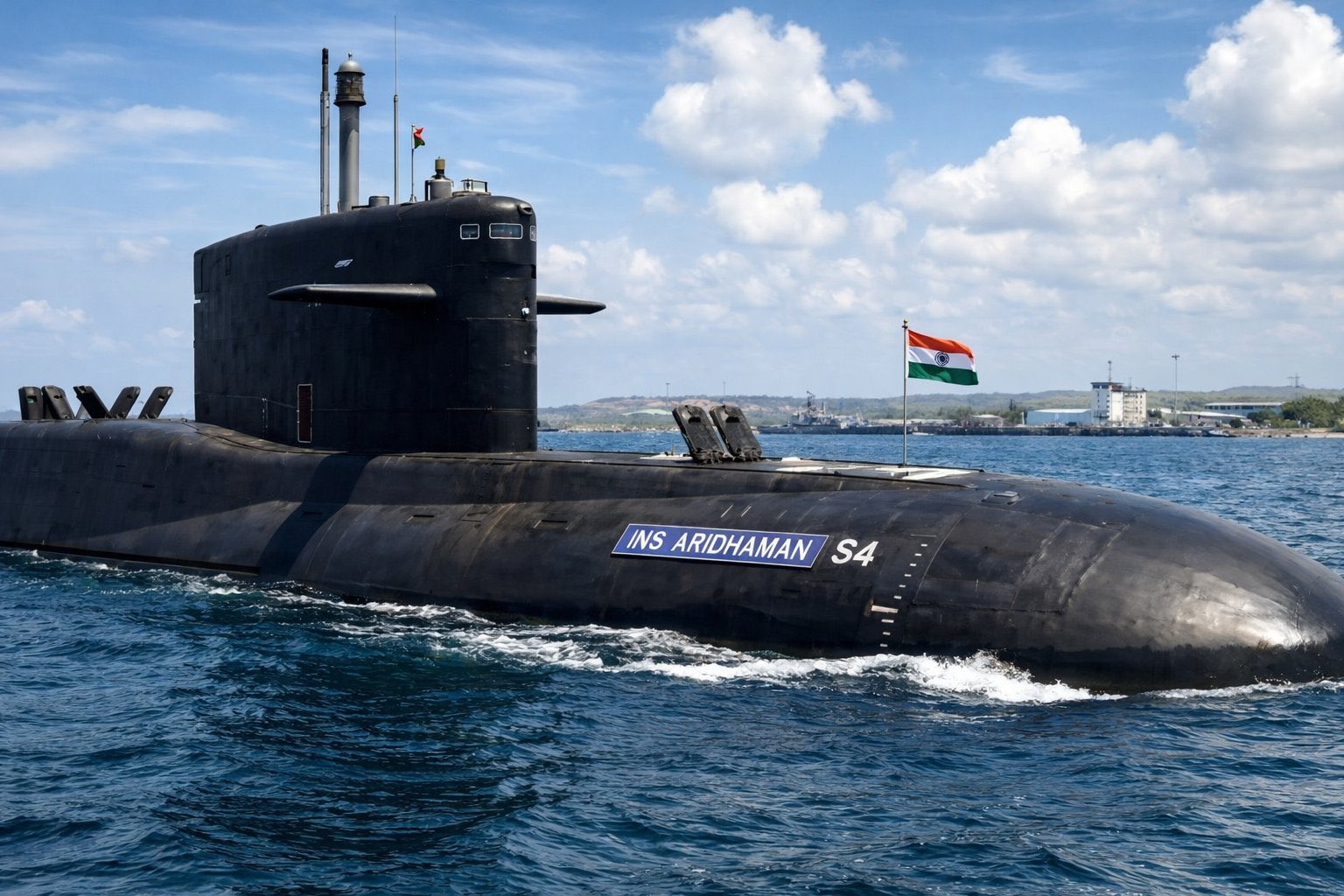
The induction of INS Aridhaman, which features several technological enhancements, now gives India the third nuclear ballistic missile submarine to ensure continuous at-sea deterrent.

Dinakar Peri

This compendium provides an independent look at how to get the most out of India’s current technology ecosystem, and the measures that may need to be adopted or re-considered in order to build a lasting and enduring framework for policy changes in the select areas under the current administration.



Konark Bhandari, Ajay Kumar, Amlan Mohanty, …
In August 2024, the U.S. Department of Defense (DoD) entered into a Security of Supply Arrangement (SOSA) with the Indian Ministry of Defence (MoD). This commentary attempts to highlight the issues that arise in the wake of the arrangement.
Konark Bhandari

This article explores the global debate on lethal autonomous weapons systems (LAWS), highlighting the convergences, complexities, and differences within and beyond the UN Group of Governmental Experts (GGE) on LAWS. It further examines India’s key position at the GGE and the probable reasons behind them.


Charukeshi Bhatt, Tejas Bharadwaj
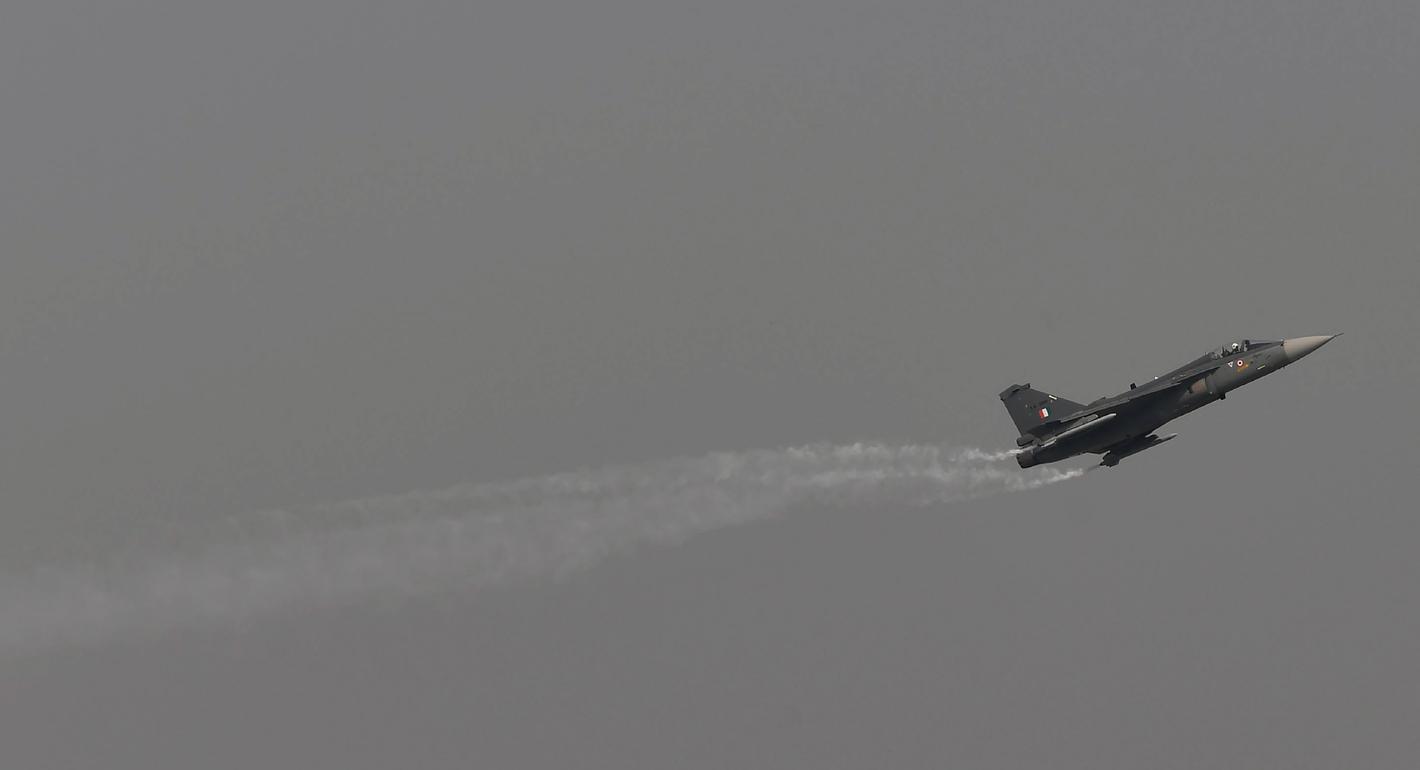
With India lacking the depth of research and design expertise required to build state-of-the-art stealth aircraft, the country needs to prioritize improving on its indigenous fighter, the Tejas.

Rahul Bhatia