

Commentary
Baku may allow radical nationalists to publicly discuss “reunification” with Azeri Iranians, but the president and key officials prefer not to comment publicly on the protests in Iran.
Bashir Kitachaev
{
  "authors": [
    "Alexander Baunov"
  ],
  "type": "commentary",
  "blog": "Carnegie Politika",
  "centerAffiliationAll": "",
  "centers": [
    "Carnegie Endowment for International Peace",
    "Carnegie Russia Eurasia Center"
  ],
  "englishNewsletterAll": "",
  "nonEnglishNewsletterAll": "",
  "primaryCenter": "Carnegie Russia Eurasia Center",
  "programAffiliation": "",
  "programs": [],
  "projects": [],
  "regions": [
    "Russia",
    "United States",
    "Venezuela",
    "Iran",
    "Europe"
  ],
  "topics": [
    "Foreign Policy",
    "Global Governance"
  ]
}
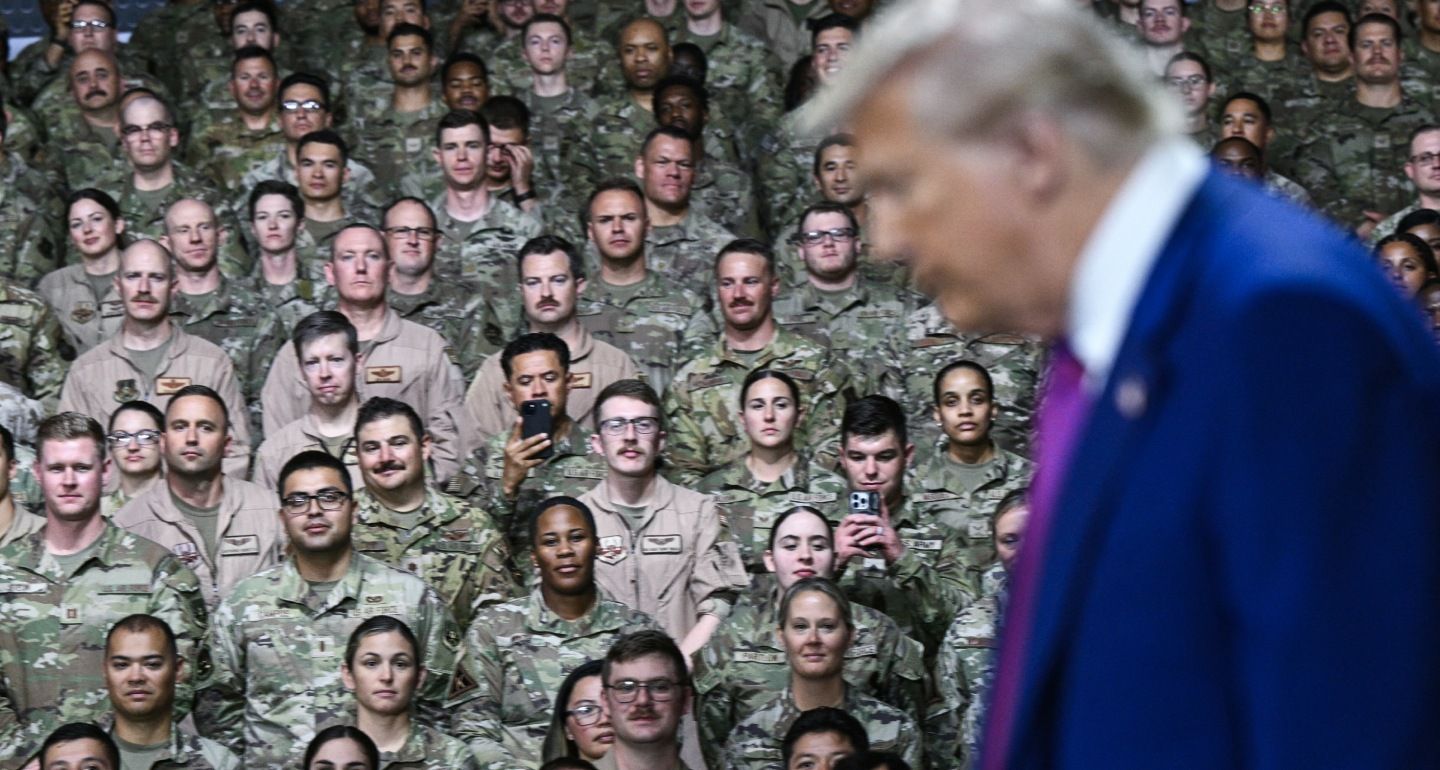
Unexpectedly, Trump’s America appears to have replaced Putin’s Russia’s as the world’s biggest disruptor.
While Russian President Vladimir Putin likes military solutions, the capture of Venezuelan President Nicolas Maduro by the United States was, on balance, a defeat. Moscow measures everything against itself, and the forcible seizure of a leader seen as an illegitimate dictator by both the United States and Europe was worrisome.
Russian pro-war commentators have subsequently held up the seizure of Maduro as something Putin should emulate. But Putin won’t be losing much sleep over their opinion. The problem for the Kremlin is what the operation means for U.S. behavior going forward. First, the capture of Maduro was a classic example of U.S. duplicity. A few hours before Maduro was taken, U.S. President Donald Trump spoke to the Venezuelan leader by phone, and while apparently unsatisfied with the call, he did at least communicate directly with Maduro as a fellow head of state. A few hours later, Maduro was in handcuffs and condemned as a drug-trafficker.
Trump also often talks to Putin by phone—and is not always happy with their conversations either. The very fact of these interactions is portrayed by Russian propaganda as a sign of comradeship, a bestowal of prestige, and an internationally recognized honor. Now it’s clear that a phone call with Trump means nothing: it could even be part of an operation that ends with the humiliating arrest of Trump’s interlocutor.
It's also worrying for Putin that the seizure of Maduro likely took place with the agreement of part of his inner circle. Aging dictators are chronically fearful of their entourage as the inevitable lynchpin for a future power transfer, and it’s entirely possible that one elite group could use external forces to try to defeat another in the struggle for the throne. Putin is an aging leader who has been weakened in the eyes of some members of the elite because of his failure to win the war in Ukraine.
The Russian leader must also be deeply disconcerted by the fact that instead of toppling an entire regime under the banner of democratization, the Trump administration has replaced a toxic leader without getting rid of his entourage. For now, all Maduro’s appointees have been left in place—in exchange for cooperating with Washington. For the Russian leader, the betrayal of Maduro by those close to him must look ominous.
The removal of Maduro also challenges the Kremlin’s worldview, which is based on the concept of “genuine sovereignty.” This means that it categorizes countries as either sovereign or vassal. With the exception of the United States, all countries that are part of the “collective West” are vassals, whatever their size or power. Those that are genuinely sovereign are those in a confrontation—either real or possible—with the “collective West.”
The prerequisites for being a genuinely sovereign state, according to Moscow, are very simple: defy the “collective West,” ideally by becoming reliant on Russia and China. If countries follow this path, their sovereignty is ensured.
However, this was exactly how Venezuela behaved—and right up to the moment of Maduro’s ouster, Russian propagandists were proclaiming that no one would dare touch him. Then his sovereignty disintegrated overnight, and the ruling party, the country’s bureaucracy, and its security establishment suddenly became pliable, handing over access to oil reserves to the United States, allowing U.S. companies to pump oil, releasing some political prisoners, and coordinating policymaking with the U.S. State Department. It’s likely, of course, that those members of the leadership left in place will try to buy off the Trump administration with minimal concessions while retaining their power and privileges. At the same time, the Venezuelan regime will still abandon its defiant rhetoric toward the United States and its demonstrative friendship with China and Russia. Accordingly, in the Kremlin’s thinking, it will cease to be truly sovereign.
In other words, Caracas has behaved in relation to Washington much more like a vassal than any member of the “collective West” has ever done. The difference is particularly stark as at the same time, Europe was symbolically testing the power of military deterrence against U.S. territorial ambitions in Greenland.
The deterioration of transatlantic relations that is currently underway over the future of Greenland exceeds anything Putin could have hoped for in his wildest dreams—though it’s true that the Russian leader is unlikely to be thrilled by Trump naming Russia and China as the countries against which the U.S. mainland needs to be defended (the justification for making the acquisition of Greenland a national security priority). In this regard, Trump and his supporters are channeling the legacy of the Cold War—which Russia lost.
At the same time, the Kremlin believes that a lot of this rhetoric (at least when it comes to Russia) is purely performative. After all, Putin recently received an invitation from Trump to join his personal United Nations: the Board of Peace.
If Washington really does give up on the cause of promoting democracy, Russia will no longer be an ideological foe. And Trump and Putin have a lot of common enemies. Nevertheless, Putin—as the self-declared protector of the Global South from Western imperialism—will find it hard to ignore the fact that most likely victims of U.S. hard power are from that very Global South. And Trump is no more fond of anti-Western blocs like the BRICS group of developing nations than he is of the European Union.
As a result, Russian officials and propagandists find themselves in a bind. On the one hand, Trump is hitting out at Russia’s allies, and also at U.S. allies under the pretext of defending the United States against Russia. On the other, he has humiliated his allies like no other U.S. leader before him; he is destroying the Western-centric world order that Moscow so despises; and he is now legitimizing behavior on the international stage that the Kremlin has itself previously used but which had been considered risky.
Of course, Moscow has an obligation to denounce aggression against allies like Maduro and Iranian leader Ali Khamenei—but to be too outspoken would only underline its weakness. As usual, Russia’s reaction to the capture of Maduro was two-fold. Bad cop Foreign Minister Sergey Lavrov condemned the operation, while good cops Kirill Dmitriev, head of the Russian Direct Investment Fund and a key interlocutor with the White House, and, to a lesser extent, Kremlin foreign policy aide Yuri Ushakov, both continued to praise Trump and expressed understanding for his motives. All the while, Putin remained silent: at a reception for foreign ambassadors, he refrained from even criticizing the seizure of Maduro.
Nevertheless, Trump the Destroyer is a source of grave concern for Moscow—because of the indiscriminate nature of his destruction. After all, there is no guarantee Trump’s destructive energy will only be used in ways that benefit Moscow. By attacking the world order, Russia wants to undermine the West. But with Trump, anyone could find themselves undermined.
In recent years, the Kremlin has become accustomed to the idea that Russia’s major asset is not so much its military power per se as the unpredictability with which it uses that military power: in other words, its willingness to behave provocatively, take risks, break rules, and suffer more casualties than the enemy. Unexpectedly, Trump’s America appears to have replaced Putin’s Russia’s as the world’s biggest disruptor. Trump has repurposed many of the tactics that made Moscow so effective, and with more resources and greater ambition, can now deploy them on a much greater scale.
Carnegie does not take institutional positions on public policy issues; the views represented herein are those of the author(s) and do not necessarily reflect the views of Carnegie, its staff, or its trustees.
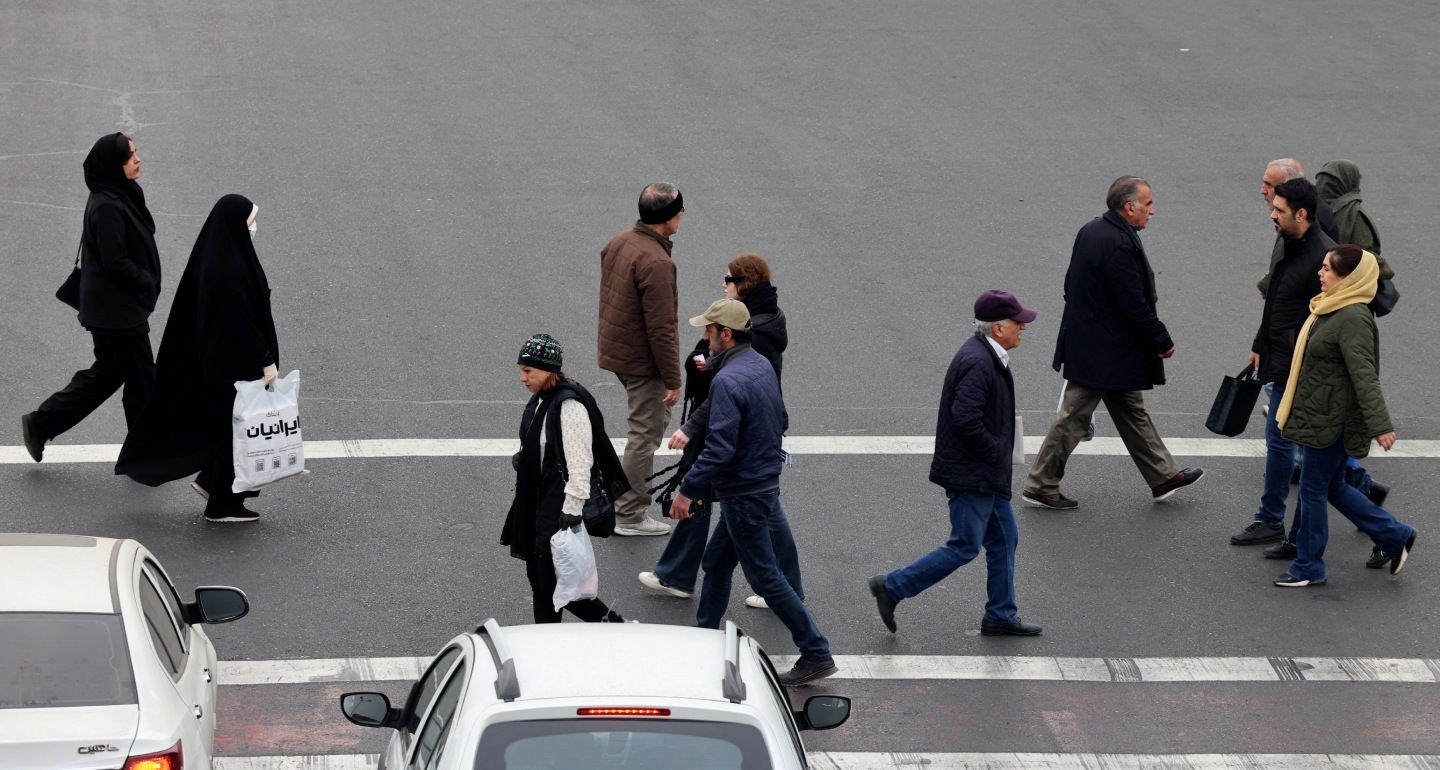
Baku may allow radical nationalists to publicly discuss “reunification” with Azeri Iranians, but the president and key officials prefer not to comment publicly on the protests in Iran.

Bashir Kitachaev
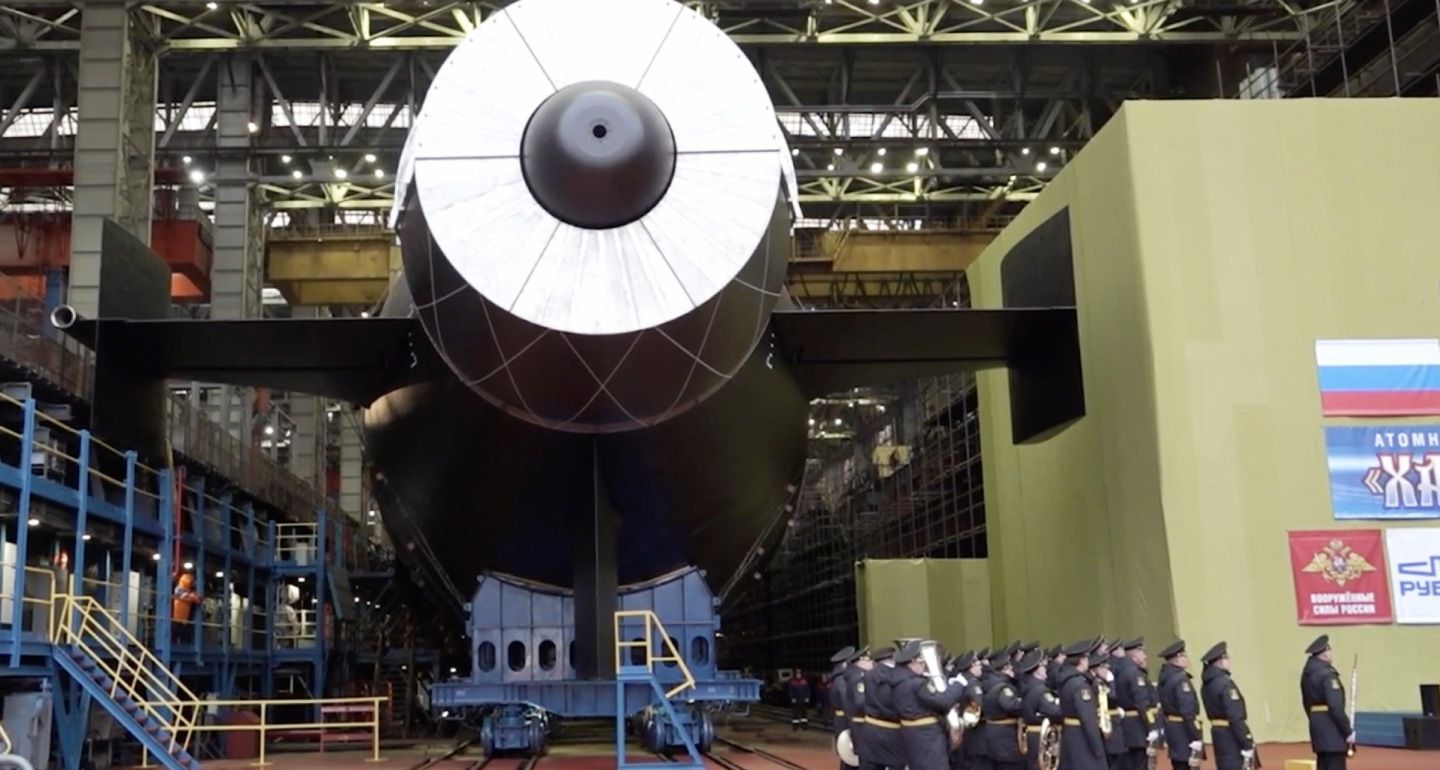
The Kremlin will only be prepared to negotiate strategic arms limitations if it is confident it can secure significant concessions from the United States. Otherwise, meaningful dialogue is unlikely, and the international system of strategic stability will continue to teeter on the brink of total collapse.
Maxim Starchak
For years, the Russian government has promoted “sovereign” digital services as an alternative to Western ones and introduced more and more online restrictions “for security purposes.” In practice, these homegrown solutions leave people vulnerable to data leaks and fraud.

Maria Kolomychenko
Geological complexity and years of mismanagement mean the Venezuelan oil industry is not the big prize officials in Moscow and Washington appear to believe.
Sergey Vakulenko
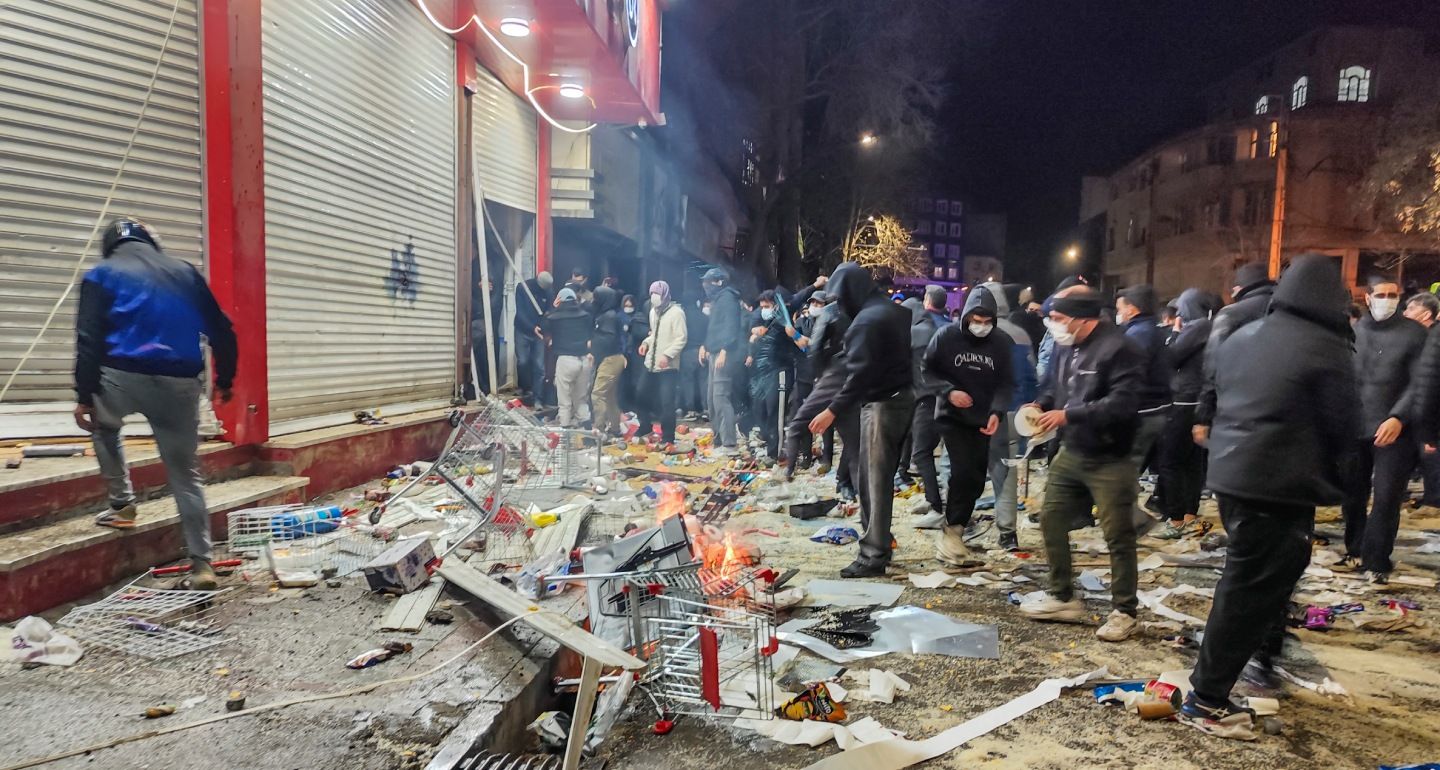
It’s one thing to export Russian helicopters to Iran to fight the insurgency, and it’s easy to imagine Moscow becoming a haven for fleeing Iranian leaders. But it’s very difficult to imagine Russian troops defending the Iranian regime on the ground.
Nikita Smagin